Motion graphics vs animation is one of the most common misunderstandings we hear during briefing calls. A marketing manager asks for “an animation” and actually needs animated typography and data visuals. Another asks for “motion graphics” and really wants a character driven story with an emotional arc. The two are related, but they do not cost the same, they do not take the same time to produce, and they do not sell in the same way.
This guide breaks down the real differences so you can pick the right format before you brief a studio, write a budget line, or lock a campaign deadline.
The short answer
Motion graphics is a subset of animation. It is the discipline of bringing movement to graphic design elements: text, logos, icons, shapes, charts, UI screens and data. Animation, in the broader sense used by marketers, usually refers to character and narrative animation in 2D or 3D, where drawn or modelled subjects perform actions and tell a story.
- Motion graphics = design in movement. It explains, clarifies and adds polish.
- 2D/3D animation = performance in movement. It creates characters, worlds and emotion.
Put differently: motion graphics makes information move, animation makes stories live.
What are motion graphics, exactly?
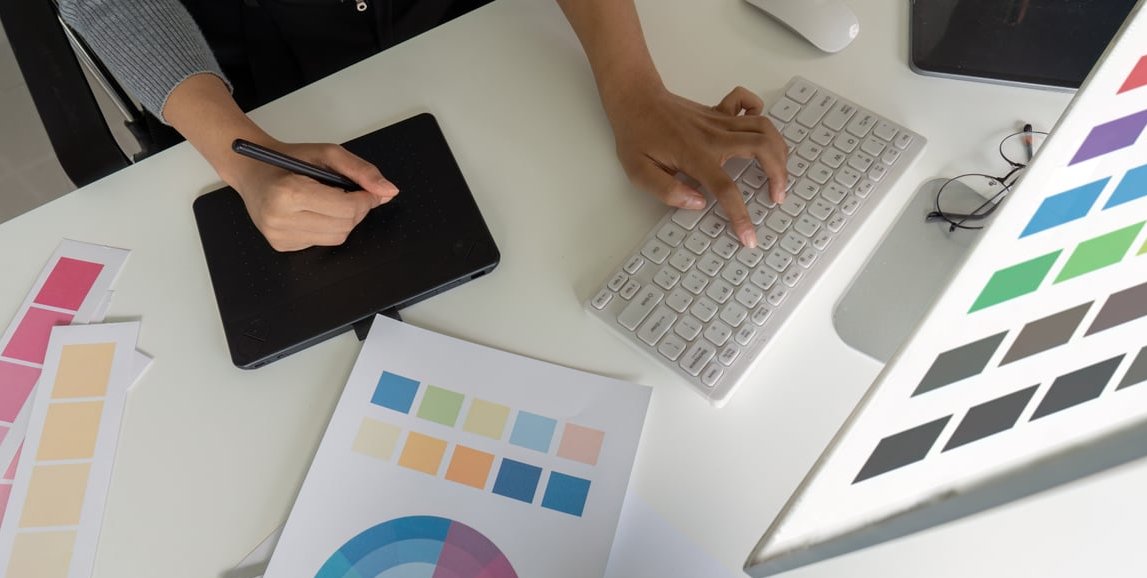
Motion graphics take static design assets and animate them along a timeline. There is no character performance, no acting, no squash and stretch on a hand drawn body. Instead, you have kinetic typography, logo stings, animated infographics, lower thirds, iconographic sequences and screen recordings enhanced with graphic layers.
Typical motion graphics deliverables
- Animated logo intros and outros (brand stings)
- Explainer videos built from icons, shapes and text
- Data visualisation and animated charts for investor or sales decks
- Social ads with kinetic typography and captions
- UI and product demo videos (SaaS walkthroughs)
- Lower thirds, title cards and transition packs for interview content
Typical tools
Adobe After Effects remains the backbone, supported by Illustrator and Photoshop for asset creation, Cinema 4D or Blender for 3D graphic elements, and Premiere Pro or DaVinci Resolve for assembly.
What is animation in the marketing sense?
Traditional 2D and 3D animation builds characters and environments that perform. It involves scriptwriting with a dramatic structure, character design, rigging (building a digital skeleton), keyframing or frame by frame drawing, lighting, and often a soundscape with voice acting.
Typical animation deliverables
- Brand films with a mascot or recurring character
- Narrative explainers where a persona lives through a problem
- 3D product renders showing exploded views, internal mechanics or materials
- Television and OTT commercials
- Educational series and long form content
- Stop motion and mixed media campaigns
Typical tools
Toon Boom Harmony and Adobe Animate for 2D, Blender, Maya, Cinema 4D, Houdini and Unreal Engine for 3D, plus render farms for heavy 3D sequences.

Motion graphics vs animation: side by side comparison
| Criteria | Motion Graphics | 2D / 3D Animation |
|---|---|---|
| Core purpose | Explain, clarify, decorate | Tell a story, create emotion |
| Main subject | Text, logos, icons, data, shapes | Characters, creatures, products, environments |
| Pre-production weight | Light: script, styleframes, simple storyboard | Heavy: script, character design, full storyboard, animatic |
| Average production time (60 to 90 sec) | 2 to 4 weeks | 5 to 12 weeks (longer for 3D) |
| Indicative budget per finished minute | €2,000 to €8,000 | €6,000 to €30,000+ |
| Revision flexibility | High: layers and text are easy to swap | Low after animation starts: changes cascade |
| Localisation cost | Low: duplicate text layers per language | Medium to high: lip sync and re-timing |
| Emotional impact | Moderate | Strong |
| Best for | SaaS explainers, social ads, data stories, brand assets | Brand films, awareness campaigns, product mechanics, series |
| Shelf life | 12 to 24 months (design trends age) | 3 to 5 years if the character is well designed |
Budget ranges are indicative for European studio rates and vary with complexity, voice over, music licensing and the number of deliverable formats.
The process difference that actually drives your budget
Most marketing managers assume the cost gap comes from rendering power. It does not. It comes from how many irreversible decisions sit upstream.
Motion graphics workflow
- Brief and script (2 to 4 days): message hierarchy, duration, platform specs
- Styleframes (3 to 5 days): 3 to 5 static frames that lock the visual direction
- Storyboard or animatic (optional, 2 to 3 days)
- Design of all assets (3 to 7 days)
- Animation (5 to 10 days)
- Sound design, voice over, export (2 to 3 days)
2D/3D animation workflow
- Script and treatment (1 to 2 weeks)
- Character and environment design (1 to 3 weeks)
- Storyboard then animatic with scratch voice (1 to 2 weeks)
- Modelling, texturing and rigging for 3D (2 to 4 weeks)
- Blocking, then animation pass, then polish (3 to 6 weeks)
- Lighting, rendering, compositing (1 to 3 weeks)
- Sound design, mix, final grade (1 week)
Notice step 4 in the animation workflow. Once a character is rigged and animated, changing the script means redoing the rig, the blocking and the render. In motion graphics, changing a sentence means editing a text layer and re-rendering in minutes. That reversibility is what you are paying less for.
Storytelling power: where each format wins
Motion graphics communicate logic. They are unbeatable when your message is a process, a comparison, a number or a feature set. The viewer follows a visual argument.
Animation communicates empathy. A character who struggles, hesitates and succeeds makes the viewer project themselves into the story. That is why brand campaigns aimed at the top of the funnel lean on animation, while mid funnel conversion assets lean on motion graphics.
A practical rule we use at Meltin’cast:
- If the audience already has the problem and needs to understand the solution, use motion graphics.
- If the audience does not yet know they have the problem, use animation.

When to use each format by campaign type
| Use case | Recommended format | Why |
|---|---|---|
| SaaS explainer on a landing page | Motion graphics + UI mockups | Shows the real interface, fast to update with each release |
| Paid social ad (6 to 15 sec) | Motion graphics | Cheap to produce in many variants for A/B testing |
| Brand awareness campaign | 2D animation | Emotional recall and differentiation |
| Industrial or medical product demo | 3D animation | Exploded views and internal mechanics cannot be filmed |
| Annual report / investor deck | Motion graphics | Data visualisation is the core message |
| Internal training series | Motion graphics with light character work | Volume of episodes requires a repeatable template |
| Logo reveal and video toolkit | Motion graphics | Reusable brand asset across every future video |
| Recruitment / employer branding | Hybrid (live action + motion graphics) | Real people plus clear on screen information |
The hybrid option most brands overlook
The motion graphics vs animation debate often misses a third path: mixing both inside one video. A 90 second explainer can open with 15 seconds of character animation to create empathy, then switch to motion graphics for the feature demonstration, then close on an animated logo sting.
This hybrid approach keeps the emotional hook while containing the budget, because only the opening sequence carries the expensive character work. It is also the structure that performs best for mid funnel assets, where you need both attention and clarity.
How to choose: a 5 question decision framework
- What is the single action I want after viewing? Click and sign up points to motion graphics. Remember and feel points to animation.
- Will this content change in the next 12 months? If your product UI or pricing evolves fast, choose motion graphics for the editability.
- How many languages and formats do I need? Six languages plus 16:9, 9:16 and 1:1 is a strong argument for motion graphics.
- What is my realistic deadline? Under five weeks, character animation in 3D is unrealistic unless assets already exist.
- Is my competitor already using the same visual language? If everyone in your category ships flat icon explainers, animation becomes a differentiation lever.
What to include in your brief to a studio
Whichever format you choose, a good brief removes half the back and forth. Include:
- The objective and KPI (view through rate, conversion, lead quality)
- The target audience and their level of product knowledge
- The distribution channels and required aspect ratios
- The exact duration or a tight range
- Your brand guidelines, fonts and existing assets
- Two or three reference videos with a note on what you like in each
- Language versions and subtitle requirements
- The budget range and the deadline, including internal validation rounds
One extra tip: specify how many revision rounds are included and who has final sign off. Unclear validation chains are the number one cause of delayed delivery, far more than technical complexity.
Common mistakes to avoid
- Asking for 3D because it sounds premium. Poorly executed 3D looks cheaper than well executed 2D.
- Cramming 400 words of voice over into 60 seconds. A comfortable pace is roughly 140 to 150 words per minute.
- Approving the animation stage without validating the storyboard. Fixing a story problem during animation multiplies the cost.
- Designing for 16:9 only then cropping for vertical feeds. Plan the safe zones from the styleframe stage.
- Forgetting sound. Sound design accounts for a large share of perceived quality, and most feeds now autoplay with sound off, so on screen text is not optional.
FAQ
What does motion design mean?
Motion design is the broader discipline of designing visual communication that moves over time. It covers motion graphics, animated branding, title sequences, UI animation and broadcast packaging. In everyday use, motion design and motion graphics are used interchangeably, although motion design emphasises the design thinking while motion graphics emphasises the output.
Is motion graphics a type of animation?
Yes. Motion graphics is a sub category of animation. Every motion graphic is animated, but not every animation is a motion graphic. The distinction marketers care about is between graphic driven animation and character driven animation.
Can I use CapCut for motion graphics?
CapCut can handle basic animated text, simple transitions and template based effects, which is enough for quick social edits and organic content. It is not built for custom keyframing, precise easing, layered compositing or brand accurate asset control. For professional brand assets, paid ads and explainer videos, After Effects remains the standard. A reasonable split is CapCut for fast organic repurposing, a studio pipeline for anything that carries media spend.
Does 3D animation have a future?
Yes, and a growing one. Real time engines such as Unreal and Blender’s EEVEE have cut rendering times drastically, virtual production is now standard in advertising, and 3D assets are increasingly reused across video, web configurators, AR try on and product pages. The skill that matters is no longer rendering alone, it is building asset libraries that work across multiple channels.
What is the difference between CGI and stop motion animation?
CGI (computer generated imagery) is created entirely inside software, with digital models, lighting and virtual cameras. Stop motion is a physical technique: real objects or puppets are moved slightly and photographed frame by frame, then played back in sequence. CGI offers unlimited revisions and camera freedom. Stop motion offers tactile authenticity that audiences perceive as handcrafted, but it is slow and almost impossible to revise after shooting.
Which format is cheaper, motion graphics or animation?
Motion graphics is typically cheaper, often half to a third of the cost of character animation for the same duration, mainly because pre-production is lighter and revisions do not cascade through a rig and render pipeline.
How long should an explainer video be?
For a landing page, aim for 60 to 90 seconds. For paid social, 6 to 15 seconds per variant. For sales enablement or onboarding, 2 to 3 minutes is acceptable because the audience is already engaged.
Ready to brief the right format?
The motion graphics vs animation question is not about which one is better. It is about matching the format to the funnel stage, the budget and the shelf life you need. Get that right and your production budget works harder for the same spend.
At Meltin’cast, we help marketing teams scope the format before a single frame is designed, then produce it end to end: script, styleframes, motion graphics, 2D and 3D animation, sound design and multi format delivery. Tell us about your project and we will come back with a format recommendation and a realistic timeline.