
Most marketing videos fail not because of bad lighting or weak editing, but because the script never gave viewers a reason to keep watching, let alone act. If you want to learn how to write a video script for marketing that turns passive scrollers into paying customers, you need more than a storytelling template. You need a conversion framework.
In this guide, we break down the exact structure we use at Meltincast to script explainer videos, social ads, and product launches that perform. No fluff, no generic “know your audience” advice you’ve read a hundred times. Just the hook formulas, timing benchmarks, and CTA placements that move the needle.
Why Most Marketing Video Scripts Don’t Convert
Before we get into the how, let’s address the elephant in the room. A script designed to win a film festival is not the same as a script designed to sell. Marketing scripts have one job: drive a specific action. That changes everything about how you write them.
Common mistakes we see in 2026:
- Spending 15 seconds on logo animations and “welcome” intros
- Burying the value proposition after the third paragraph
- Writing for the brand instead of the viewer’s problem
- One vague CTA dropped at the very end
- Ignoring platform-specific attention spans

The 4-Part Conversion Script Framework
Every high-converting marketing script we write follows the same four-part structure. Think of it as the backbone you can adapt to any format.
1. The Hook (First 3 Seconds)
Your hook is not the start of the story. It is the reason someone doesn’t swipe away. On TikTok, Reels, and YouTube Shorts, you have roughly 1.7 seconds before the scroll decision is made. On YouTube long-form, you get about 8 seconds.
Use one of these proven hook patterns:
- The Pattern Interrupt: “Stop using email subject lines like this.”
- The Bold Claim: “We cut our customer acquisition cost by 64% with one script change.”
- The Callout: “If you run a Shopify store and you’re not doing this, you’re losing money.”
- The Question Loop: “Why do some product demos convert at 12% while others flatline?”
- The Visual Shock: Open mid-action, mid-result, or mid-transformation.
Pro tip: Write five hooks for every script, then pick the strongest. Most writers settle for the first one and lose 40% of their audience.
2. The Problem-Stakes Bridge (Seconds 3 to 15)
After the hook, agitate the problem and raise the stakes. Show viewers you understand exactly what’s costing them time, money, or sanity. This is where you build the emotional grip that makes the solution feel necessary, not optional.
Formula:
“You’re doing [current behavior]. The problem is [hidden cost]. And if you keep going, [consequence].”
3. The Solution Reveal (The Middle 60%)
Now introduce your product, service, or method as the obvious bridge from problem to outcome. Be specific. Vague benefits like “save time” are dead in 2026. Quantify, demonstrate, prove.
Structure your solution section like this:
- Name the solution clearly
- Show how it works in one or two simple steps
- Stack the outcome (what changes in the viewer’s life)
- Add one piece of proof (number, testimonial, before/after)
4. The Call to Action (Last 10 to 15%)
This is where most scripts collapse. A weak CTA kills a strong video. Strong CTAs are specific, single, and urgent.
Weak: “Visit our website to learn more.”
Strong: “Click the link below and book your free 15-minute strategy call. We only take 10 new clients this month.”
Place a soft CTA around the 60% mark (a brand mention or visual cue) and the hard CTA in the final seconds.

Timing Benchmarks by Video Type
Script length should match platform and intent. Here are the targets we hit at Meltincast in 2026:
| Video Type | Ideal Length | Word Count | Hook Window |
|---|---|---|---|
| TikTok / Reels / Shorts | 15 to 30 sec | 40 to 80 | 1 to 2 sec |
| Social Ad (Meta, LinkedIn) | 30 to 60 sec | 75 to 150 | 3 sec |
| Explainer Video | 60 to 90 sec | 150 to 225 | 5 sec |
| Product Demo | 90 to 180 sec | 225 to 450 | 8 sec |
| YouTube Long-Form Sales | 5 to 10 min | 750 to 1500 | 8 to 15 sec |
Rule of thumb: 150 words equals roughly one minute of voiceover at a natural pace.
Concrete Example: A 60-Second Explainer Script
Let’s apply the framework to a SaaS explainer for a fictional invoicing tool.
Hook (0-3s): “Freelancers lose an average of 9 hours a month chasing unpaid invoices.”
Problem-Stakes (3-15s): “That’s a full workday gone, every single month. You’re sending follow-up emails, juggling spreadsheets, and still getting paid late. Meanwhile, your real work piles up.”
Solution (15-50s): “PayFlow sends automatic reminders the moment an invoice is overdue. Connect your bank, upload your client list, and PayFlow handles the awkward chasing for you. Our users get paid 4.2 days faster on average and reclaim 8 hours a month. Sarah, a freelance designer, recovered 3,400 dollars in late payments in her first 30 days.”
CTA (50-60s): “Start your free 14-day trial at payflow dot com. No card required. Get paid faster, starting today.”

Concrete Example: A 20-Second Social Media Script
Hook: “This is why your Reels get 200 views and die.”
Problem: “You’re starting with a logo. The algorithm scores the first 2 seconds, and a logo means zero retention.”
Solution: “Open with motion, a face, or a bold claim. Save your branding for the middle.”
CTA: “Follow for more script tips that 10x your reach.”
5 Script-Writing Habits That Separate Pros from Amateurs
- Read it out loud. If you stumble, your viewer will too.
- Cut every third word. Tight scripts convert. Bloated ones don’t.
- Write visuals in the margin. A script is not just words, it’s a blueprint for what’s on screen.
- End scenes on tension. Each beat should pull the viewer into the next.
- A/B test your hooks. Same video, two hooks. The difference in performance is often 3x or more.
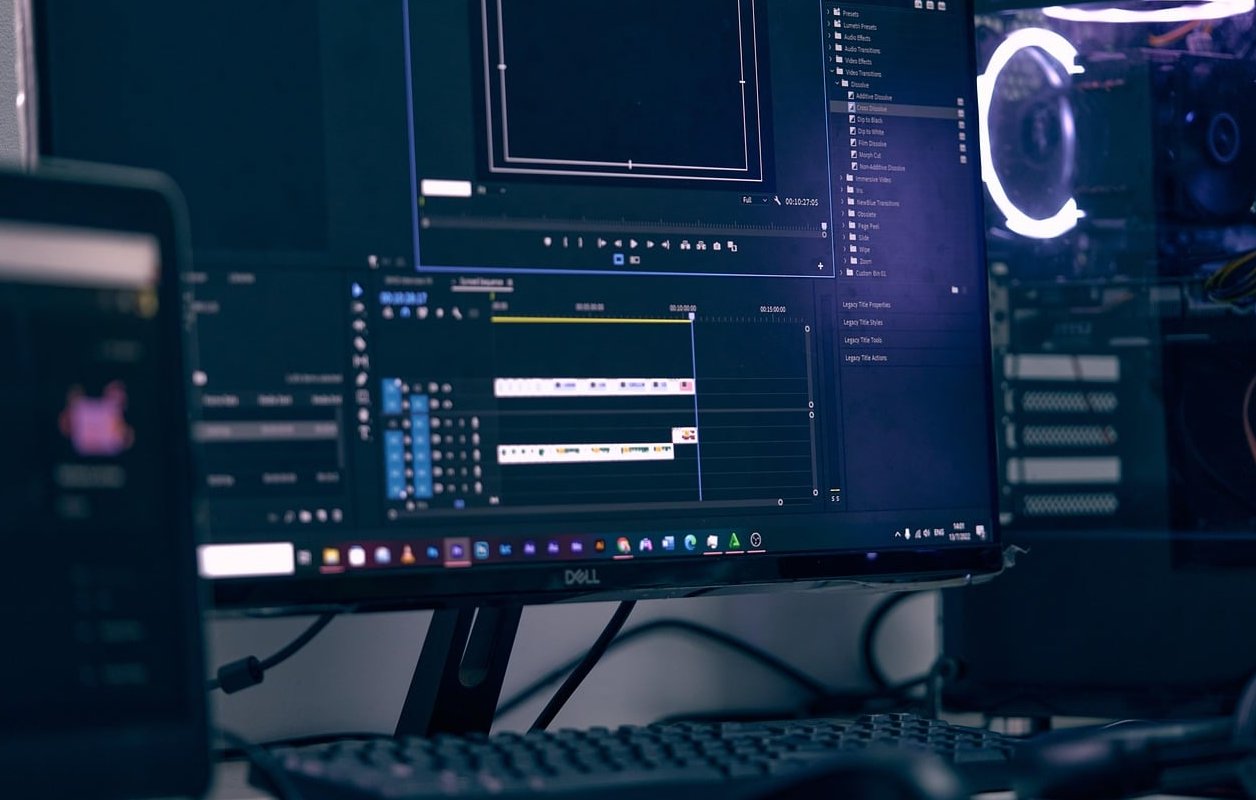
Tools We Use at Meltincast in 2026
- Google Docs with a two-column script template (visual / audio)
- Descript for rapid script-to-rough-cut iteration
- ChatGPT and Claude for hook brainstorming, never for final copy
- VidIQ and TubeBuddy for retention benchmarks
FAQ
How long should a marketing video script be?
It depends on the platform. Social ads run 30 to 60 seconds (75 to 150 words). Explainers sit around 90 seconds (225 words). Long-form YouTube sales videos can stretch to 10 minutes. Always match length to the viewer’s intent at that moment.
Can I use ChatGPT to write my video script?
Yes, but use it for ideation, not the final draft. AI is excellent at generating 10 hook variations or restructuring a paragraph. It’s poor at writing copy that sounds human and brand-specific. Always rewrite the output in your own voice.
What are the 3 C’s of a great marketing script?
Clarity (the message is instantly understood), Conciseness (no wasted words), and Conversion (every line moves the viewer closer to the action). If a sentence fails one of the three, cut or rewrite it.
Where should I place the call to action?
Two places. A soft CTA around 50 to 60% of the way through (brand mention, on-screen URL), and a hard CTA in the final 10 to 15% with a clear, specific action.
What’s the biggest mistake in marketing video scripts?
Starting slow. If you don’t earn the first 3 seconds, nothing else in the script matters. Cut your intro, drop the logo opener, and lead with your strongest line.
Final Word
Writing a video script for marketing that converts is a craft, not a formula. But the framework, hook, problem, solution, CTA, gives you a reliable structure to work from. Combine it with disciplined timing and a relentless focus on the viewer’s action, and your videos will stop being content and start being assets.
Need help scripting your next campaign? Meltincast writes and produces conversion-focused video content for brands ready to take their marketing seriously. Get in touch and let’s build something that performs.